

From the endless plains where the Great Migration thunders to the coral-fringed shores of the Indian Ocean’s most enchanting island — the Serengeti safari and Zanzibar vacation is East Africa’s most compelling dual journey.
Introduction
Picture two mornings, one week apart. The first: you are in an open safari vehicle before dawn, wrapped in a fleece against the cold Serengeti air, watching the eastern horizon turn from violet to amber as the plains emerge from darkness. A lioness is walking thirty meters ahead of you, unhurried, heading toward a waterhole where a herd of zebras have not yet registered her presence. The grass is silver with dew. The sky is enormous. You have never felt more awake in your life.
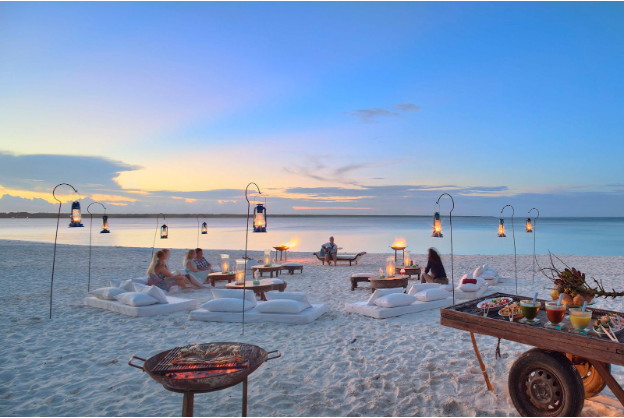
The second morning: you step from your beach villa directly onto white coral sand. The Indian Ocean is completely still in the early light, jade-green in the shallows and deepening to sapphire further out. A dhow is crossing the horizon under full sail. The air smells of salt and the faint sweetness of the clove trees growing just inland. You have nowhere to be, nothing to do, and no desire for either to change.
These two mornings — both in Tanzania, one week and a short flight apart — define the Serengeti safari and Zanzibar vacation. They represent opposite ends of a single experiential spectrum: the alert, outward-focused intensity of the safari and the receptive, inward-turning peace of the island. Together, they create a journey of extraordinary completeness that has made this combination one of the most celebrated travel experiences available anywhere in the world.
This article is your definitive guide to the Serengeti safari and Zanzibar vacation — what each destination offers at its finest, how to travel between them, when to go, how to structure your time, and what makes the difference between a good trip and a genuinely transformative one.
The Serengeti: Africa’s Greatest Wildlife Stage
A Landscape Unchanged by Time
The Serengeti National Park occupies 14,763 square kilometers of northern Tanzania — a vast, open ecosystem of short-grass plains, acacia woodland, riverine forest, and the granite rock formations called kopjes that rise from the savannah floor like the ancient bones of the earth. The park forms the Tanzanian half of the greater Serengeti-Mara ecosystem, which extends northward across the Kenyan border into the Maasai Mara to encompass over 30,000 square kilometers of continuous protected wilderness.
Designated a UNESCO World Heritage Site in 1981, the Serengeti has been a theater of wildlife drama for two million years. Its carrying capacity for large mammals is extraordinary — an estimated three million animals inhabit or pass through the ecosystem annually, including more than 70 large mammal species and over 500 bird species. No other terrestrial ecosystem on Earth supports wildlife populations of comparable density, diversity, and accessibility.
The Great Migration: Nature’s Greatest Spectacle
The Serengeti’s defining event — the phenomenon that draws more wildlife travelers to northern Tanzania than any other — is the Great Migration. Each year, over 1.5 million wildebeest, 700,000 zebras, and half a million Thomson’s gazelles undertake a continuous, circular journey through the Serengeti-Mara ecosystem, driven by the seasonal availability of rainfall and the fresh grass it generates. There is no beginning and no end to this movement — it is a perpetual circuit, an unbroken chain of biological necessity that has continued without interruption for hundreds of thousands of years.
The migration presents dramatically different spectacles depending on the season and location within the ecosystem:
Southern Serengeti and Ndutu — Calving Season (January through March): The southern plains receive the vast herds as the short rains bring fresh nutritious grass to the Ndutu area straddling the Serengeti and Ngorongoro Conservation Area boundary. From late January through February, approximately 500,000 wildebeest calves are born within a compressed six-week window — a biological strategy of overwhelming predators through sheer numerical abundance. The calving plains are dense with drama: tender scenes of newborns taking their first steps within minutes of birth, and the constant, circling attention of cheetah, lion, hyena, wild dog, and jackal drawn by the abundance. For emotional wildlife intensity, nothing in the Serengeti rivals the calving season.
Western Corridor — Grumeti River Crossings (June and July): The northward migration reaches the western corridor’s Grumeti River, where massive Nile crocodiles have waited through the lean months for exactly this moment. The Grumeti crossings are less publicized than those further north but are frequently as dramatic, and the significantly lower visitor numbers create a more intimate and exclusive viewing experience.
Northern Serengeti — Mara River Crossings (August through October): The migration’s most iconic chapter. Columns of wildebeest and zebra stretch for kilometers across the northern plains, gathering at the Mara River in their tens of thousands before instinct overcomes hesitation and the crossing begins. Crocodiles surge. Animals scramble, fall, recover, and press on. Some cross safely; some do not. The Mara River crossings are wildlife spectacle at its most primal and most cinematic — the moment that wildlife photographers travel from every corner of the world to witness, and that wildlife lovers carry as a defining memory for the rest of their lives.
Return South — Short Rains Season (November and December): The short rains regenerate the southern grass and the herds begin their return, completing the circuit. This period offers excellent game viewing with a fraction of the peak-season visitor numbers, vivid green landscapes of extraordinary photographic beauty, and a sense of having the Serengeti almost to yourself.
Resident Wildlife Beyond the Migration
Even for visitors who arrive between migration phases, the Serengeti delivers game viewing of the highest order through its permanent resident populations. The Seronera Valley in the central park is Africa’s most reliable year-round predator corridor — resident lion prides are habituated to vehicles and approachable to distances that would be impossible elsewhere; leopard drape themselves in the sausage trees above the river pools and are regularly visible to patient observers; cheetah mothers raise cubs in the open grasslands with a visibility that makes the Serengeti the finest cheetah-viewing destination on the continent.
Elephant, giraffe, hippopotamus, crocodile, Cape buffalo, topi, eland, impala, Grant’s and Thomson’s gazelle, warthog, African wild dog, spotted hyena, silver-backed jackal, bat-eared fox, and an extraordinary diversity of raptors and waterbirds complete a wildlife inventory that makes every single Serengeti game drive an event of genuine discovery.
Zanzibar: The Indian Ocean’s Spice Island at Its Finest
Stone Town: Where History Lives and Breathes
Zanzibar’s ancient capital is not merely a historic quarter — it is a living, breathing civilization of extraordinary complexity and beauty. Stone Town’s UNESCO World Heritage status reflects the remarkable integrity of its built environment: hundreds of coral-stone buildings constructed over centuries of Indian Ocean trade, their facades ornamented with the ornately carved wooden doors that are Zanzibar’s most distinctive architectural signature. Each door tells a story — the brass studs that once deterred war elephants, the geometric carvings that speak to Persian influence, the fish motifs of Swahili maritime culture.
The town rewards unhurried exploration. The Darajani spice market, fragrant with cloves, cinnamon, cardamom, and nutmeg. The Palace Museum and the Old Fort within metres of each other on the waterfront. The former slave market and Anglican Cathedral — a site of profound historical weight where the Indian Ocean slave trade’s human cost is documented with unsentimental honesty. The Forodhani Gardens waterfront food market at dusk, where freshly grilled seafood and sugar cane juice are served as the harbor lights come on and the Indian Ocean turns gold.
A minimum of half a day in Stone Town with a knowledgeable local guide transforms the experience from sightseeing to genuine encounter with one of the world’s great island civilizations.
The Beaches: A Guide to Zanzibar’s Finest Shores
Zanzibar’s beaches differ meaningfully in character, and matching beach choice to traveler temperament significantly enhances the island chapter of any Serengeti safari and Zanzibar vacation:
Nungwi (Northwest Coast): The island’s most consistently swimmable beach — calm, protected lagoon waters year-round, white sand, excellent restaurants, water sports facilities, and a lively social energy. The natural fish bowl at the beach’s southern end is home to sea turtles that can be observed at close range from the shore. Ideal for travelers who want beach comfort combined with activity and a social atmosphere after the solitary intensity of the safari.
Kendwa (Northwest, adjacent to Nungwi): The same exceptional water conditions as Nungwi with a quieter, more intimate atmosphere. Full-moon beach parties are a celebrated Kendwa tradition. The preferred choice for couples and those seeking a balance of beach quality and tranquility.
Paje (East Coast): A long, spectacular sweep of white sand facing the open Indian Ocean, with the shallow lagoon and extensive sandflats characteristic of Zanzibar’s eastern coast. Paje is the Indian Ocean’s premier kitesurfing destination and draws an active, independent traveler demographic. More remote and authentically local in character than the northwest beaches — best for travelers who want genuine seclusion and direct contact with the island’s natural rhythms.
Jambiani and Bwejuu (Southeast): Zanzibar’s least developed and most contemplative coastline. Small fishing villages, seaweed farms on the lagoon margins, and an almost complete absence of resort infrastructure create a beach experience of rare authenticity. These beaches are for travelers who want to disappear entirely, to sit with the ocean and their thoughts, to be somewhere genuinely removed from the modern world.
Marine Activities
The Indian Ocean surrounding Zanzibar is a marine environment of exceptional biodiversity, complementing the Serengeti’s terrestrial wildlife with an entirely different dimension of natural encounter:
Mnemba Atoll Marine Conservation Area — accessible by boat from the northeast coast — is one of the Indian Ocean’s premier snorkeling and diving destinations. The atoll’s pristine coral reef systems support green and hawksbill sea turtles, white-tip and black-tip reef sharks, manta rays, whale sharks (seasonally), dolphins, moray eels, and an extraordinary abundance and diversity of reef fish. For safari travelers who have spent days watching African megafauna, the transition to hovering weightlessly above a coral garden populated by creatures of equal magnificence is a revelation.
Dolphin-watching at Kizimkazi on the island’s southwestern tip delivers near-guaranteed encounters with resident populations of Indo-Pacific bottlenose and humpback dolphins — the same waters where these animals have been studied by marine biologists for decades.
Traditional dhow sailing on hand-carved wooden vessels that have crossed the Indian Ocean since the first millennium connects travelers to the maritime heritage that shaped Zanzibar’s entire civilization. A sunset dhow cruise from Stone Town’s harbor — watching the light fail over the Indian Ocean from a craft unchanged in design for a thousand years — is an experience of extraordinary historical and sensory resonance.
Connecting the Destinations: Travel Logistics
The practical connection between the Serengeti and Zanzibar is streamlined by Tanzania’s domestic aviation network. Light aircraft services operated by Coastal Aviation, Auric Air, ZanAir, and Air Excel connect Zanzibar’s Abeid Amani Karume International Airport with multiple Serengeti bush airstrips — including Seronera (central), Kogatende (northern), Grumeti (western corridor), and Ndutu (southern) — with flight times of approximately 2 to 3.5 hours depending on routing and intermediate stops.
Commercial scheduled services on Precision Air and Air Tanzania connect Zanzibar to Kilimanjaro International Airport in approximately 1 hour 20 minutes, from where domestic carriers provide onward connections to Serengeti airstrips. A skilled specialist operator coordinates all internal flights, ground transfers, and park-entry logistics as part of a single managed itinerary — removing the considerable complexity of multi-destination East African travel from the traveler’s hands entirely.
Structuring Your Serengeti Safari and Zanzibar Vacation
8-Night Classic Journey
Days 1–2: Zanzibar — Arrive, Stone Town exploration, northern beach introduction. Day 3: Travel — Fly Zanzibar to Serengeti (direct light aircraft). Afternoon game drive. Days 4–7: Serengeti — Four full game-drive days across different ecosystem zones. Day 8: Return — Morning game drive, fly out to Zanzibar for final beach night or international departure.
10-Night Signature Experience
Days 1–3: Zanzibar — Stone Town, beach, Mnemba Atoll snorkeling, sunset dhow cruise. Day 4: Travel — Fly to Kilimanjaro, transfer to Ngorongoro crater rim lodge. Day 5: Ngorongoro Crater — Full Big Five crater game drive. Days 6–10: Serengeti — Five nights across central and northern ecosystem zones. Return to Zanzibar for final nights or international departure via Kilimanjaro
12-Night Honeymoon Journey
Days 1–4: Zanzibar — Luxury beach villa, private Stone Town tour, couples’ spa, private Mnemba snorkeling charter. Day 5: Travel — Light aircraft Zanzibar direct to Serengeti. Days 6–10: Serengeti — Luxury tented camp, private game drives, bush dinner under the stars, sunrise balloon safari. Days 11–12: Zanzibar — Return to island for final beach recovery.
Best Timing for the Combination
Two seasonal windows stand out as exceptional for combining the Serengeti with Zanzibar:
January and February offer the extraordinary convergence of the Serengeti’s calving season — the migration’s most emotionally intense phase — with Zanzibar’s finest northeast monsoon beach conditions. Warm, dry island weather and calm, clear ocean water make this the premier window for travelers who want both beach perfection and migration drama simultaneously.
June through October delivers the dry season’s reliable game-viewing conditions across the Serengeti, the dramatic Mara River crossings of August through October, and consistently pleasant Zanzibar conditions. This window is the most popular for the combination and should be booked six to twelve months in advance for the best accommodation availability.
Key Takeaways
- The Serengeti safari and Zanzibar vacation is one of the world’s most celebrated travel combinations — delivering wildlife intensity and beach paradise within a single seamlessly connected East African journey.
- The Great Migration — over 1.5 million wildebeest in continuous annual movement — presents dramatically different spectacles in different seasons: calving (January–March), Grumeti crossings (June–July), and Mara River crossings (August–October).
- The Seronera Valley delivers Africa’s finest year-round predator viewing regardless of migration positioning — resident lion, leopard, and cheetah provide reliable sightings on almost every drive.
- Light aircraft connections from Zanzibar reach multiple Serengeti airstrips in 2 to 3.5 hours — making the transition between ocean and savannah one of the most efficient in adventure travel.
- Stone Town is a UNESCO-listed Indian Ocean civilization of exceptional depth — a minimum of half a day with a knowledgeable local guide is essential for every combined itinerary.
- Beach selection matters: Nungwi for year-round swimming and social energy, Kendwa for couples and tranquility, Paje for seclusion and kitesurfing, Jambiani and Bwejuu for authentic island immersion.
- Mnemba Atoll snorkeling and diving delivers marine biodiversity of world-class quality — sea turtles, reef sharks, manta rays, and extraordinary coral ecosystems.
- January–February is the dual sweet spot: Zanzibar’s finest beach season coincides with the Serengeti’s most emotionally powerful calving season.
- Four full game-drive days is the recommended minimum in the Serengeti; five to six days allows meaningful exploration of multiple ecosystem zones and dramatically improves the probability of witnessing rare events.
- Specialist TATO-accredited operators provide the guide quality, logistics coordination, and camp positioning expertise that elevate the combination from good to genuinely extraordinary.
Questions & Answers
Q: What is the single best time of year for a Serengeti safari and Zanzibar vacation? If forced to choose a single optimal window, January and February stand out as exceptional. Zanzibar enjoys its finest beach weather during the northeast monsoon dry period — warm, calm, and ideal for snorkeling and swimming. Simultaneously, the southern Serengeti’s calving season is at its dramatic peak, with predator activity at extraordinary intensity around the wildebeest birthing grounds near Ndutu. This convergence of peak island conditions with the migration’s most emotionally powerful chapter creates a dual experience that no other seasonal window quite replicates. June through October is the popular alternative for travelers primarily drawn by the iconic Mara River crossing spectacle.
Q: How many nights should I spend in the Serengeti versus Zanzibar? For a 10-night combined vacation, four to five Serengeti nights and four to five Zanzibar nights represents a well-balanced allocation. For 12 nights, five to six in the Serengeti and five to six in Zanzibar allows genuine immersion in both destinations. The key principle is resisting the temptation to spread time too thinly — three full game-drive days is the absolute minimum for the Serengeti to reveal its depth; two full beach days in Zanzibar is barely enough to decompress after the safari’s intensity. When in doubt, add a night to each destination rather than compressing either.
Q: What is a Serengeti balloon safari and is it worth including in the vacation? A hot air balloon safari over the Serengeti is among Tanzania’s most celebrated optional experiences and is worth serious consideration for any vacation that includes the central Serengeti. Pre-dawn inflation, a one-hour sunrise flight over the plains watching wildlife below in complete silence, and a champagne bush breakfast served on white linen in the middle of the Serengeti — the balloon safari costs approximately USD 500 to 600 per person and must be pre-booked through your operator. The aerial perspective of the Serengeti at sunrise — the scale of the ecosystem revealed in a way that ground-level game drives cannot provide — makes it a deeply worthwhile addition for most travelers. Book as early as possible as availability at peak season is limited.
Q: Is the Serengeti and Zanzibar combination appropriate for families with children? Tanzania is an outstanding family destination and the Serengeti and Zanzibar combination works well for families with children of appropriate ages. The Serengeti’s resident wildlife — consistently present and reliably viewable — means children are virtually guaranteed extraordinary sightings. Some luxury camps and lodges set minimum age requirements of 8 or 12 years for game drives in open vehicles near dangerous wildlife — always confirm with your operator before booking. Zanzibar’s northern beaches offer calm, shallow lagoon water ideal for children of all ages. Stone Town’s history is accessible and engaging for older children and teenagers. The overall combination rewards curiosity and wonder at every age.
Q: What is the difference between staying in a Serengeti lodge versus a tented camp? Both offer excellent safari experiences but with meaningfully different characters. Permanent lodges — typically constructed on raised platforms or rocky kopje — provide the greatest comfort and amenity, with en-suite bathrooms, electricity, swimming pools, and dining areas with panoramic views. The experience is sophisticated and comfortable, with less physical connection to the bush environment. Tented camps — canvas walls, open-fronted rooms, closer proximity to ambient sounds and wildlife movement — provide a more immersive bush experience where falling asleep to hyena calls and waking to birdsong are genuine features rather than occasional surprises. Many experienced safari travelers prefer camps precisely for this visceral connection to the wilderness. Premium tented camps match lodges in service quality and food standard while dramatically exceeding them in atmosphere.
Q: How far in advance should I book a Serengeti safari and Zanzibar vacation? For peak season travel — July through October for Mara River crossings, January through February for calving season — booking 9 to 12 months in advance is strongly recommended, particularly for mobile migration camps and premium tented properties with limited inventory. The Serengeti’s best accommodation sells out early, and last-minute availability at quality properties during peak windows is genuinely rare. Shoulder season travel (November, May, early June) can often be arranged with 3 to 6 months notice. Zanzibar accommodation is generally more flexible, but premium beach properties at the northern resorts also book quickly for the July through August peak. Your specialist operator should guide timing decisions based on current availability and migration positioning.
Conclusion
There is a quality that the finest journeys share — a quality that has nothing to do with luxury or distance or the number of countries crossed. It is the quality of having been fully present in extraordinary places, of having allowed those places to make their full claims on your attention and your imagination, of having returned home with something genuinely new inside you.
The Serengeti safari and Zanzibar vacation earns that quality honestly. The Serengeti does not allow distraction. When a lion is walking toward your vehicle in the pre-dawn light, when a river crossing is building and the first wildebeest are testing the water’s edge, when a cheetah rises from the grass and begins her acceleration across the plain — in those moments, everything else falls away. You are entirely, gloriously present. The world contracts to this: the animal, the light, the breath you are holding without realizing it.
Zanzibar does something different but equally valuable. It expands over time. The beach provides space — physical, psychological, temporal — in which the safari’s compressed intensity can spread out and be examined at leisure. The Indian Ocean’s rhythm is patient and ancient. It has no interest in rushing you. Stone Town’s carved doorways and spice-fragrant alleys reward the unhurried gaze. The coral reef below the surface of Mnemba Atoll receives you without judgment or urgency, asking only that you look and wonder.
Between them — between the savannah and the sea, between alertness and repose, between the lion’s morning walk across the silver-dewed Serengeti grass and the dhow’s crossing of a golden harbor at dusk — lies a journey that is genuinely, lastingly complete. It does not leave you wishing for more. It leaves you, instead, with more than you arrived with: more awe, more perspective, more gratitude for the extraordinary, improbable beauty of the world.