
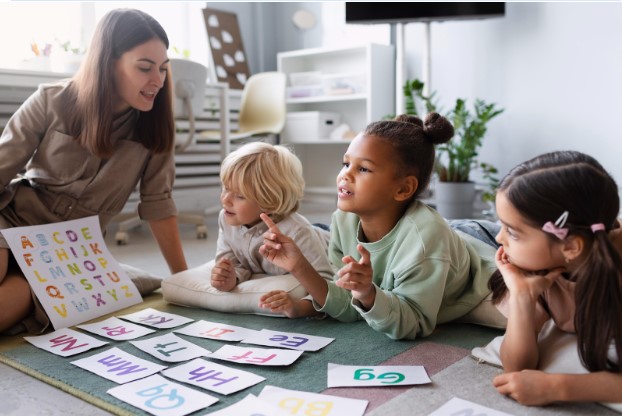

Early learning is a significant part of the development of children, their thoughts, and their cognition of the world. An excellent preschool program gives young children the correct start. It helps them to find, interact, and have confidence. Children during this age are learners who learn through movements, play, and curiosity. Having a proper environment, they start acquiring skills that will sustain their further learning.
The Role of Play in Early Learning
Most good preschool programs are centered on play. Children cannot learn by sitting still. They acquire through touching, trying, building, and talking. It is through play that they understand new concepts in convenient ways.
Another important aspect learned during play is to share and cooperate. Group work demonstrates listening and turn-taking. Through these skills, the foundation of good classroom behavior in the future will be laid.
Build Strong Language and Communication Skills
A preschool program that is of good quality provides children with numerous opportunities to talk and listen. The stories are read, songs are sung, and conversations are promoted by the teachers. Such poor activities can make children learn new words and communicate more effectively.
The storytelling develops listening abilities. Singing is better in recall and beat. Conversations with friends can assist children in constructing sentences and questions. As time passes, they become certain about language usage. This trust encourages their reading and writing at a young age in school.
Encourage Early Math and Problem Solving
Skills in math have become a priority long before one would believe. In preschool, one is conditioned to do things by learning the basics without their knowledge. They count the toys, match the objects based on their color or size, and can recognize a simple pattern. Puzzles, matching games, among other activities make them think critically. They get to know how to resolve minor issues and make decisions.
Early exposure to math will simplify the process for children to grasp the numbers later in school. Preschool program presents such ideas in a non-emphatic manner and therefore, learning is enjoyable rather than hectic.
Support Social and Emotional Growth
A preschool atmosphere is one where a child is supposed to have their maiden experience in a group. This is why it is a significant aspect of social and emotional skills. Children learn how to interact with the rest of the population, locate friends, and discover feelings.
When teachers find them in a situation of conflict, they take them to light and help them to come up with peaceful solutions. Children are also taught responsibility, such as cleaning after playing or performing their routine chores. The practices build self-confidence and self-independence.
Develop Creativity and Curiosity
Preschool involves creativity in children. Art classes, music programs, and creative play help them to express themselves. Inquisitiveness is not constrained. Children will be encouraged to ask questions, sample new things, and share ideas.
Creative activities enable children to learn how to interpret things in further detail. They are trained to think out of the box and become creative in coming up with ideas. This creativity at an early age will assist them at a later stage in school, where they are supposed to solve problems and think outside the box.