
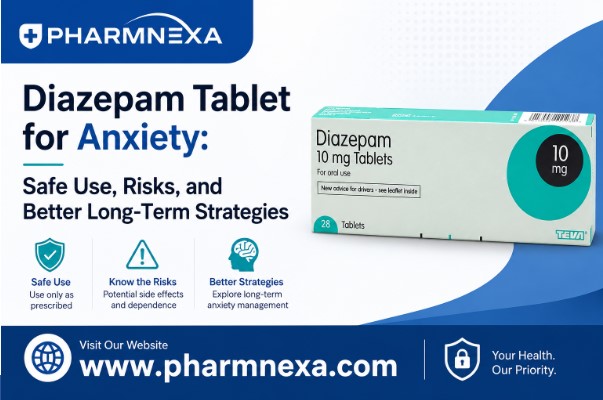
Anxiety may affect your thoughts, your sleep, and your performance throughout the day. If the symptoms become severe, it is sometimes recommended that you take a diazepam tablet for this issue. The drug works in some cases, but it is not the only part of the solution.
What diazepam does?
Diazepam is classified under the drug class known as benzodiazepines. Diazepam works by slowing the brain’s functions, thereby alleviating symptoms of anxiety, nervousness, and physical tension. Due to its calming properties, diazepam tablet can be administered when needed, particularly during times of extreme stress.
Nevertheless, it is not intended for long-term use. The aim is merely to offer a short-term solution until other interventions resolve the problem.
When it may be considered?
Short-term medication can be used when the anxiety level becomes intense enough to cause problems in sleeping, working, or other daily activities. The dosage and time span are as limited as possible. This conservative practice is usual in medications for anxiety UK, including the usage of benzodiazepines.
It actually means that the purpose of medication here is just to normalize symptoms.
Risks and side effects
In common with other sleeping pills, diazepam may bring about such problems as drowsiness, delayed reflexes, and decreased attention. The patient may experience forgetfulness and “clouded” mental function after taking the drug.
Tolerance and addiction can result from the use of diazepam regularly. However, if diazepam consumption is discontinued, you will face withdrawal symptoms. Hence, each tablet of diazepam should be used based on a prescription issued by the physician.
Alcohol intake or any other sedative intake alongside diazepam greatly increases the likelihood of side effects.
Why self-directed use can backfire?
When one feels very anxious, there is an urge for immediate relief. However, taking medicines before a proper evaluation fails to address the whole issue. Anxiety is usually related to stressful patterns, lifestyle, and other diseases.
A single pill of diazepam helps relieve the patient for the moment, but the real causes of anxiety are still unattended.
What works better over time?
Often, long-term solutions arise from blending multiple approaches. In general, non-pharmacological interventions may serve as the basis of treatment and be very successful.
Some of the most popular include:
- Cognitive Behavioral Therapy (CBT)
- A consistent exercise regimen
- Improvements to sleep hygiene
- Stress management practices like deep breathing or meditation
In the context of medications for anxiety UK, other forms of treatment, including some antidepressants, can be explored for long-term management.
When to seek professional advice?
Nonetheless, if the anxiety persists beyond several weeks and begins to interfere with your normal functioning, it would be advisable that you seek out a suitable healthcare practitioner. You could be prescribed a diazepam tablet for some time.
There are some cases where the use of a diazepam tablet can also be incorporated into a short-term strategy. It is primarily the structure involved in this case that makes it different from other methods.
A practical perspective
Another issue that tends to be neglected is the influence of our everyday behavior on our anxiety levels. Lack of sleep, too much coffee, and stress can only contribute to making things worse. Even though behavioral change cannot substitute for therapy, it certainly complements it.
Change is gradual. Progressing steadily and improving our behavior through proper sleep and exercise will yield better outcomes than quick fixes.
Final takeaway
Taking a diazepam tablet will work for acute anxiety, but this is not a complete cure. For safe and successful treatment, combining short-term interventions with long-term treatments is recommended.
The best way to deal with anxiety, therefore, entails professional advice, proper medication, and continuous lifestyle adjustments.

