
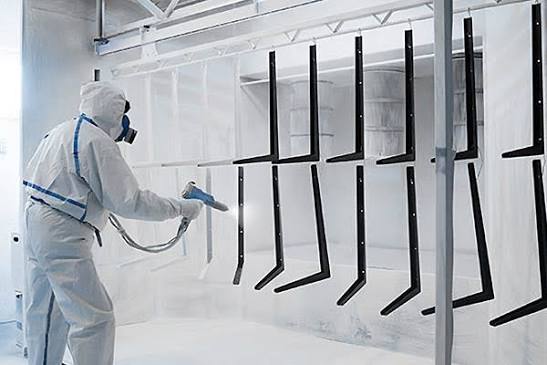
Durable metal products often depend on finishing that can handle repeated use, weather exposure, handling, and everyday wear without becoming unnecessarily complicated to produce. Parts that can tolerate oven curing and accept electrostatic powder application are especially well suited to a properly planned finishing line. Product size, geometry, metal thickness, production volume, and final appearance all help determine which powder coating equipment configuration makes sense.
Sheet Metal Enclosures Benefit From Consistent Coverage and Controlled Cure
Cabinets, electrical enclosures, control boxes, equipment panels, and similar sheet metal products are strong candidates for Reliant powder coating systems because they often combine broad visible surfaces with bends, corners, louvers, and recessed areas. Consistent grounding and controlled gun settings help powder reach those different surfaces without creating excessive buildup on easy-to-coat edges. Because thin sheet heats relatively quickly, oven dwell times can often be managed efficiently once operators confirm the actual part-metal temperature. Manufacturers comparing Reliant powder coating equipment for sale can size booths, racks, and curing capacity around recurring enclosure dimensions rather than treating each batch as custom work.
Welded Frames and Fabricated Assemblies Need Room Around the Load
Frames for machinery, carts, equipment bases, guards, and welded supports introduce more complicated geometry than flat panels. Tubing, gussets, brackets, boxed sections, and overlapping members can block spray access and restrict heated airflow if racks are packed too tightly. A Reliant industrial powder coating oven can be useful for these products when chamber clearances and circulation are planned around the complete loaded frame instead of its outside dimensions alone.
Heavy weldments also contain sections that heat at different rates. Thick joints and reinforcement plates may lag behind lighter tubing, so relying only on oven-air temperature can lead to inconsistent curing. Temperature profiling allows a shop to identify the slowest-heating area and establish a realistic recipe. Reliant powder coating ovens can then support repeat runs with known load patterns instead of forcing operators to add extra oven time to every fabricated assembly.
Outdoor Furniture and Site Products Put Finish Appearance Under Scrutiny
Benches, tables, bicycle racks, railings, planters, and outdoor fixtures need coatings that look clean while standing up to handling and environmental exposure. Visible tubing and welded joints make surface preparation especially important because rust, weld residue, or oil left beneath the powder can affect adhesion and appearance. Properly arranged Reliant powder coating equipment helps businesses control application, color changes, and curing for products where customers notice gloss, texture, and coverage as soon as the item leaves the shop.
Wheels, Automotive Components, and Small Fabricated Parts Suit Repeatable Batch Work
Wheels, brackets, suspension-related components, covers, housings, and other automotive or transportation parts can benefit from batch processing when operators need repeatable film build across recurring designs. Curves, holes, recesses, and tight corners may require changes in voltage, powder flow, or gun position rather than simply applying more material. Consistent racking improves grounding and keeps each part oriented the same way during spraying.
Batch flexibility also helps shops serving restoration, aftermarket, or low-volume production work where colors and part types change often. A Reliant powder coating equipment package can bring the booth, application equipment, oven, and handling arrangement into one production plan instead of leaving employees to adapt mismatched components for each job. Buyers evaluating a Reliant powder coating oven for sale should still account for wheel mass and rack weight because several dense parts can create a larger thermal load than their physical size suggests.
Agricultural Components Often Demand More From Heating Capacity
Implements, guards, brackets, frames, hitch components, and machinery parts frequently use heavy steel that takes longer to reach cure temperature than light-gauge products. Reliable Reliant powder curing ovens can help manufacturers process these parts when burner output, insulation, airflow, and chamber volume are suited to dense loads. Outdoor service also makes pretreatment and coating selection important, since complete cure cannot compensate for poorly cleaned metal or an unsuitable powder formulation.
Shelving, Racks, and Storage Products Reward Efficient Part Handling
Shelving uprights, brackets, wire products, frames, and storage-system components are often produced in volumes where material handling can have a noticeable effect on labor time. Well-designed fixtures can hold several pieces securely while maintaining good electrical contact and enough spacing for spray access. Organized carriers also help shops get more from their powder coating equipment by reducing unnecessary handling after application and protecting uncured surfaces as parts move toward the oven.
Long products bring another set of layout concerns because aisle width and door openings can become limiting factors before chamber volume does. Straight loading paths reduce the amount of turning required around booths and ovens, while properly sized racks keep components from extending beyond their carriers. Reliant powder coating systems can support this type of production by matching equipment dimensions and handling methods to the products being coated instead of forcing lengthy parts through a setup designed around compact components.
Architectural Metalwork Needs Both Appearance and Process Discipline
Handrails, decorative panels, gates, trim pieces, screens, and architectural fabrications often place a premium on appearance because surfaces remain visible after installation. Clean pretreatment, controlled film thickness, careful color handling, and consistent curing help prevent defects from becoming obvious across large finished areas. Specialized finishes may also have their own cure requirements, making verified recipes valuable for shops handling several colors, textures, or gloss levels.
Product Fit Comes Down to Geometry, Heat, and Production Rhythm
Suitable candidates for powder coating generally share a few practical traits: the substrate can withstand curing temperatures, the surfaces can be prepared properly, and the part can be grounded, coated, moved, and heated without damaging the finish. Reliant Finishing Systems can help shops dealing with that range of products by supplying ovens and equipment packages suited to everything from compact sheet-metal batches to bulky welded work. Rather than forcing unrelated products through one rigid setup, manufacturers can select Reliant powder coating equipment around the shapes, rack loads, and cure demands that show up on their own production floor.


