
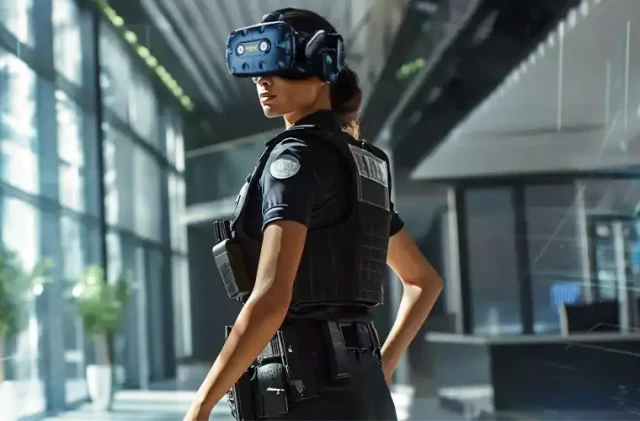
In today’s increasingly unpredictable world, emergency response teams must be prepared to react quickly, efficiently, and confidently in a wide range of critical situations. Natural disasters, industrial accidents, medical emergencies, fires, hazardous material incidents, and public safety threats demand rapid decision-making and coordinated action. Traditional training methods, while valuable, often struggle to recreate the intensity and unpredictability of real-life emergencies. This is where Virtual Reality (VR) technology is transforming crisis intervention training by providing immersive, realistic, and highly interactive learning experiences. VR crisis intervention training helps improve preparedness, safety, and operational performance.
Factors contributing to the popularity of VR crisis intervention training
Virtual Reality or VR offers emergency personnel the opportunity to train within digitally created environments that closely mimic real-world emergency situations. Instead of relying solely on classroom instruction, videos, or occasional field exercises, VR crisis intervention training allow responders to enter fully immersive simulations where they must react to unfolding events in real time. These environments can include burning buildings, mass casualty incidents, chemical spills, natural disaster zones, active rescue operations, and other complex scenarios that would otherwise be expensive, dangerous, or logistically difficult to recreate physically.
One of the greatest advantages of VR crisis intervention and emergency response training is the level of realism it provides. Through immersive visuals, sound effects, interactive elements, and dynamic scenarios, trainees experience situations that feel remarkably authentic. This realism helps responders develop situational awareness and practical skills that are directly transferable to actual emergencies. By repeatedly practicing in lifelike environments, personnel become more familiar with emergency procedures, communication protocols, and operational workflows.
Another major benefit is the opportunity for hands-on learning in a completely safe and controlled environment. Emergency responders can practice high-risk procedures, test decision-making abilities, and refine technical skills without putting themselves, colleagues, or the public in danger. Mistakes made during training become valuable learning experiences rather than costly or harmful failures. This type of experiential learning significantly improves knowledge retention and builds greater confidence among trainees, ensuring they are better prepared when faced with real emergencies.
VR training platforms also provide immediate performance feedback, which is essential for continuous improvement. During simulated scenarios, systems can track actions, response times, communication effectiveness, and procedural accuracy. Trainers can then review detailed performance data with participants, helping them identify weaknesses, improve critical thinking, and strengthen decision-making abilities under pressure. This real-time evaluation process enables organisations to create more effective and measurable training programs.
Stress management is another critical area where VR delivers substantial value. Emergency situations are often chaotic, emotionally intense, and physically demanding. Responders must remain calm while making rapid decisions that can affect lives and property. Virtual Reality simulations expose trainees to high-pressure environments where they must manage distractions, uncertainty, and time-sensitive challenges. Repeated exposure to these conditions helps individuals build emotional resilience, improve focus, and develop coping strategies that can enhance performance during real emergencies.
Another significant advantage of VR crisis intervention training is cost efficiency over the long term. Traditional live training exercises often require extensive planning, specialized equipment, dedicated facilities, travel expenses, and temporary operational shutdowns. VR solutions can reduce many of these costs while still delivering highly effective training experiences.

